TRIGGER WARNING: Sensitive Subject of Doubtful Taste
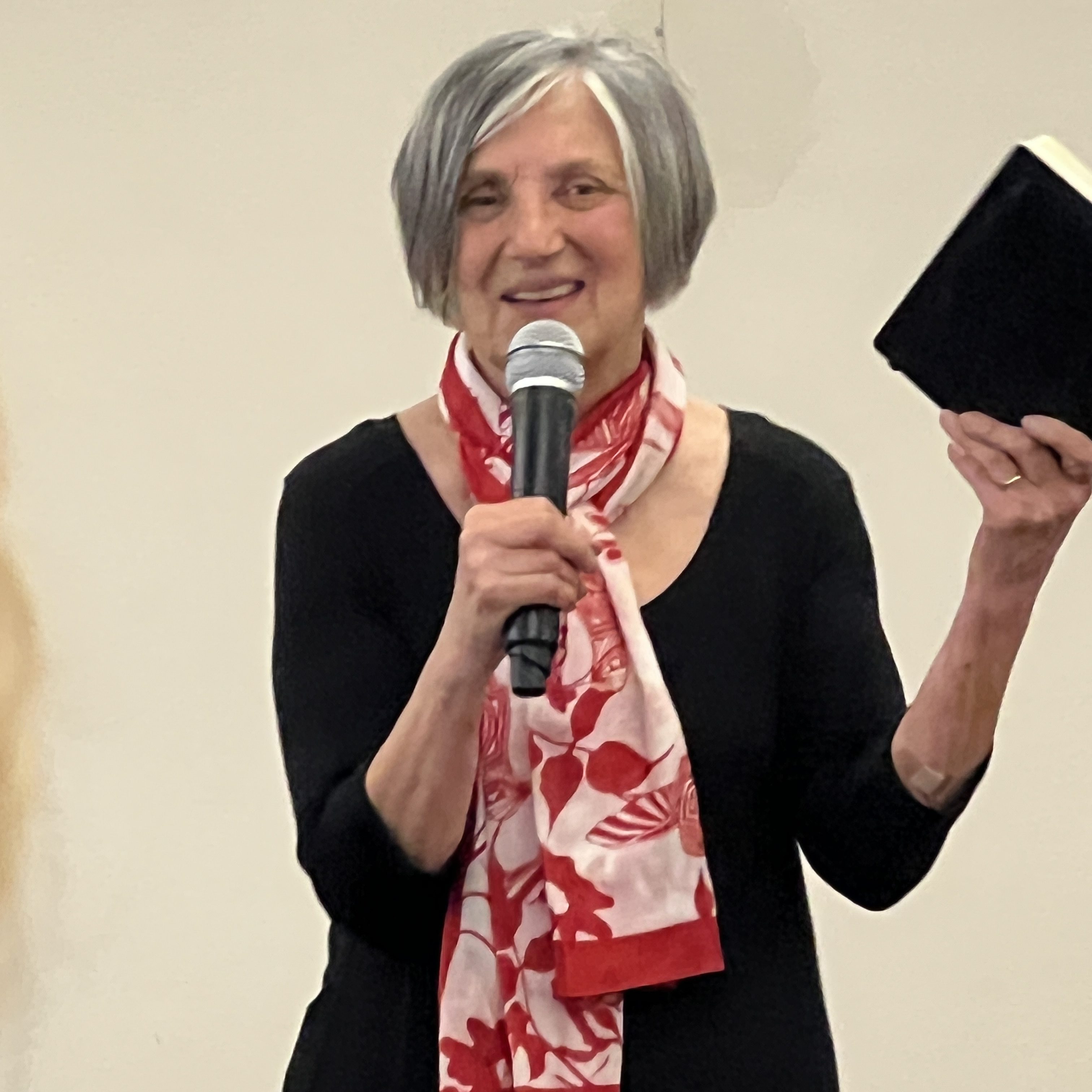
Quarter Press recently solicited stories with the theme “What We Do With The Ashes” for its subsidiary The Quarter(ly) . The subject might shock some people, but I couldn’t resist writing a quasi-touching/quasi humorous short story that is based partly on fact, partly on fiction. I have no sisters. I have never owned a Honda. But I did have a mishap with my father’s ashes. I was thrilled that the editor wrote that he loved the piece. You can purchase a copy of The Quarter(ly) Vol. 14 at quarterpress.com. The story is reprinted below.
Bach’s Cantata
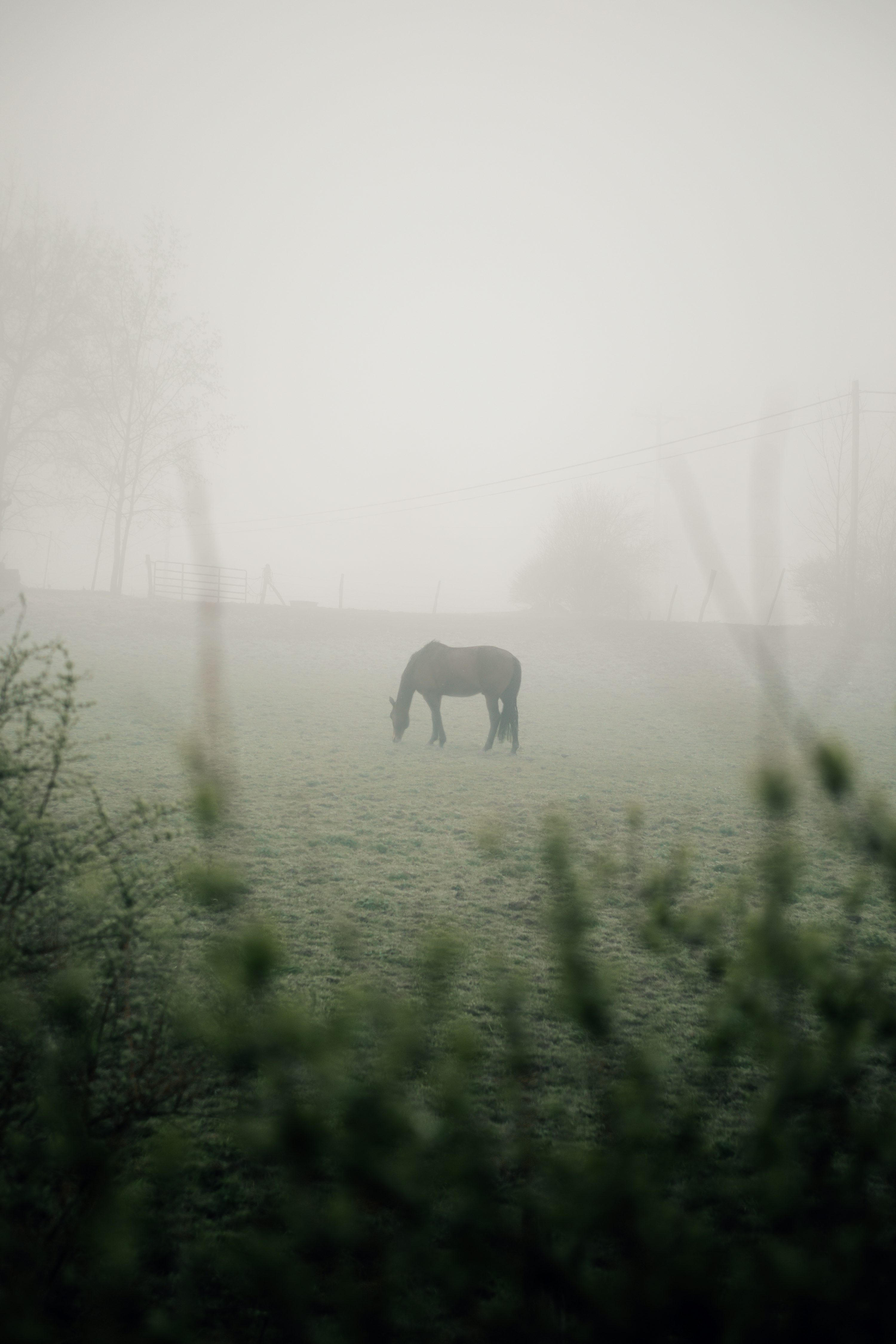
The racetrack was closed for the season. Not boarded up or anything, just closed. There were no cars in the parking lot, not even a security vehicle. I could see the stables, the clubhouse, and the empty grandstand with its tiers of blue plastic seats. I rolled down the window on my little Honda and sniffed the air. No smell of horses or manure. It was quiet. The only sound was the racetrack flag whipping around in the strong March wind.
I counted to ten. Then twenty. Then ten again. I needed to get up my courage before opening the car door. I didn’t relish the thought of trespassing onto private property with a box full of human remains, but I had promised Daddy that I would spread his ashes onto the Winner’s Circle.
“The Winner’s Circle. Don’t forget. That’s sacred ground, for me,” he had said, squeezing my hand as he lay in his hospital bed, raspy with old age and more.
My hands were moist and my bladder felt weirdly full, even though I had stopped to pee at the last McDonald’s before the exit. I told myself to count to ten one more time and then pull the car closer to the grassy circle. I had planned out my actions so I could get the job done quickly. First, I’d take the lid off the metal box, use a big scoop, reach in, open the car door, make a run for it, and do what I had promised to do.
My parents had always been very matter of fact about their end of life wishes. Neither was religious, neither believed in “mumbo-jumbo” as they liked to say. Mama had wanted to be brought back to the old country and strewn into the mountains. No services, no flowers, no clergy. Just her daughters, and the urn, and a six hour upward trek for which none of us were prepared. Betsy, my older sister, was wearing Crocs, for God’s sake, and Lulu, my younger sister, was three months pregnant and too nauseous to climb, so she and Daddy had waited in an Auberge in the nearest village, eating crepes and drinking sweet cider, while Betsy and I made the ascent.
Theoretically, Daddy’s interment would be easier: a domestic excursion to one of the many racetracks where his beloved Bach’s Cantata had raced. But this time it was Betsy who was heavily pregnant and suffering from pre-eclampsia to boot. Her doctor wouldn’t let her make the trip back East from California. Lulu was living on an army base in Okinawa, which gave her a good excuse as well. When Daddy passed, I had called each of them, but since there were to be no religious services, they didn’t see the point of trying to come back to New Hampshire, so we all had a good cry via FaceTime ,and we talked about our parents and what they had done and what they hadn’t done, and that was that.
“You’ll take care of the ashes, right?” asked Betsy, in that older sister voice of hers, as if she were telling me that it was my turn to do the dishes, and I assured her I would.
I suppose I could have waited until we were all together again, but I had no idea when Lulu and Betsy would be back in Concord and willing to sneak onto a racetrack and place Daddy where he wanted to be.
We weren’t rich, but Daddy owned a thoroughbred. Or as he used to joke, “I own the tail and the right leg.” Race horses can cost more than a house, more than a yacht, more than a Ferrari. We never knew why he thought a racehorse was a good investment. Or even if he thought of Bach’s Cantata as an investment. We only knew that he was smitten. Totally smitten. He had gotten the horse after he retired from the last orchestra to hire him. Mama was gone by then, too.
“Just look at that beautiful creature,” Daddy would say, clocking his beloved horse with a stopwatch. “That animal represents everything that’s marvelous in life.”
I still have that stopwatch. I keep it in a kitchen drawer, next to the garlic press and the ice cream scoop. I have no use for a stop watch, but every now and then, I take it out and think about things. About Daddy talking about his horse, for instance.
“Oh, 1:11, that’s no good. He’s bobbled again,” he’d say, sometimes using racing terminology that might as well have been Greek to the rest of us.
We never knew where he learned it. He was a musician by training, not a sportsman.
“Ah, he broke in tangle,” Daddy would mutter, leaning over the track fence, concentrating on the horse’s gait and expressing frustration that Bach’s Cantata was not “cutting the mustard”.
Daddy never complained that Bach’s Cantata was a constant drain on his finances, the way he used to moan about the cost of prom dresses or summer camp. We all watched him shell out money for an equine vet, special feed, stalls, trailers, vitamin shots, grooming and more. If Bach’s Cantata was scheduled for a race, nothing else seemed to matter. Not a newborn grandchild, not a Fulbright won by a son-in-law, not an upcoming wedding.
If Bach’s Cantata won, it was as if the King had just been coronated. Daddy would share photos taken in the Winner’s Circle, photos showing the brilliantly green grass, the glorious horse with his silky fur beaded with sweat, the diminutive jockey standing on one side, Daddy and the other owners on the other, rose garlands, smiles, all eyes on the victorious faces.
“Oh you should have been there,” he’d say, grinning and telling the story over and over, again using racing terms that none of us understood. “At the clubhouse turn, it was a heavy track, and Jacob’s Ladder was lugging in, and the other favorite was off the pace and….”
We had never seen him so happy under other circumstances, even when Betsy was valedictorian at Smith, and Lulu had twins. In his own career, he had gotten by, as Mama used to say. He roamed from gig to gig, orchestra to orchestra, but he’d obtained few accolades. Once the Arts Council of Concord had recognized him with a small plaque as a local musician. He’d given endless lessons to make ends meet until Mama received a small inheritance after Grandma died.
As I sat in my little Honda watching the sun move across the sky, I knew that I needed to get up my resolve and do the deed quickly. I pulled up as close to the Winner’s Circle as I could. The flag was now fluttering furiously on top of the grandstand.
I took a deep breath. I pried the lid off the metal container. I looked inside. I knew what cremated remains looked like, having seen Grandma’s and Mama’s. Chunkier than one would expect. Not smooth like beach sand. I had even found a piece of metal in Mama’s, her dental bridge that hadn’t burned. It made me cry, but it also felt precious. Like the only real part of her I could still touch.
Daddy’s ashes were not so chunky. More like gray dust, with no odor or distinction. I thought back to how Daddy smelled of shaving lotion, like bergamot, and how his hair was always clean. When we were small, we’d all want to hang on him but, if he had a concert, he’d pull each of us off, as if we were leeches, and tell us he had to get dressed. And we’d watch him go off to a concert in his black tuxedo, his stiff white shirt, immaculate and dazzling, his fingernails manicured. Sometimes he would look back and wave, vaguely, at the house, at us, at Mama.
I held the big scoop in one hand and flung the car door open.
Just at that moment, a squall came up. A squall that almost knocked me over. The wind grabbed hold of contents of the scoop and the top layer of the container, spitting that human dust back into the Honda, where it landed on the steering wheel, in the little cracks of the upholstery, over the visors, onto the floor mats, and throughout the rubber folds of the gear shift.
Daddy was everywhere and nowhere. I closed the car door as quickly as I could, but the damage had been done.
As soon as the wind calmed down a bit, I ran to the Winner’s Circle and dumped the rest of the container onto the grass, unceremoniously, like sprinkling parmesan cheese on a pizza. I didn’t feel guilty, I felt ridiculous. Daddy had wanted no prayers or ritual, but surely he wanted a more dignified send-off than this.
As I drove off, I wept and laughed and wept and got angry for things that had happened a long time ago, and then wept again. The whole process struck me as ignoble and absurd, and somehow wrong. Life shouldn’t end like that.
Later I called Betsy in California and Lulu in Okinawa and told them what happened. And together, we wept and laughed and got angry, just as I had done when I was alone.
Until I sold that Honda, five years later, I kept finding little pieces of Daddy here and there, even though I vacuumed carefully with a crevice tool. Whenever I would see a bit of ash,I would actually talk to my father in a way that I never got to talk to him while he was alive. I didn’t tell Betsy and Lulu about it, because I thought they might feel a bit jealous, and there was no point in making the whole thing more complicated.


 Gabriella Brand
Leave a reply to breillycomcastnet Cancel reply