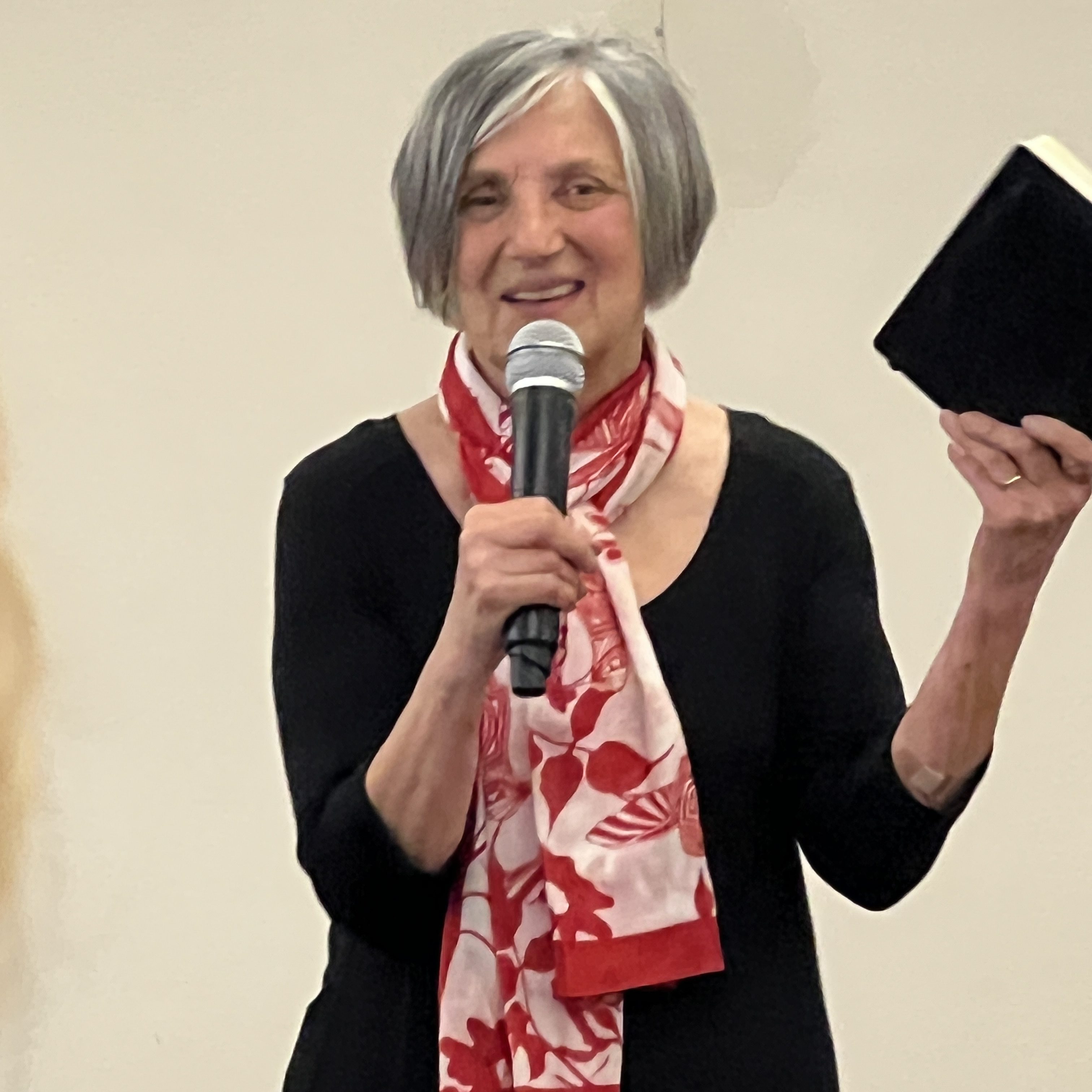
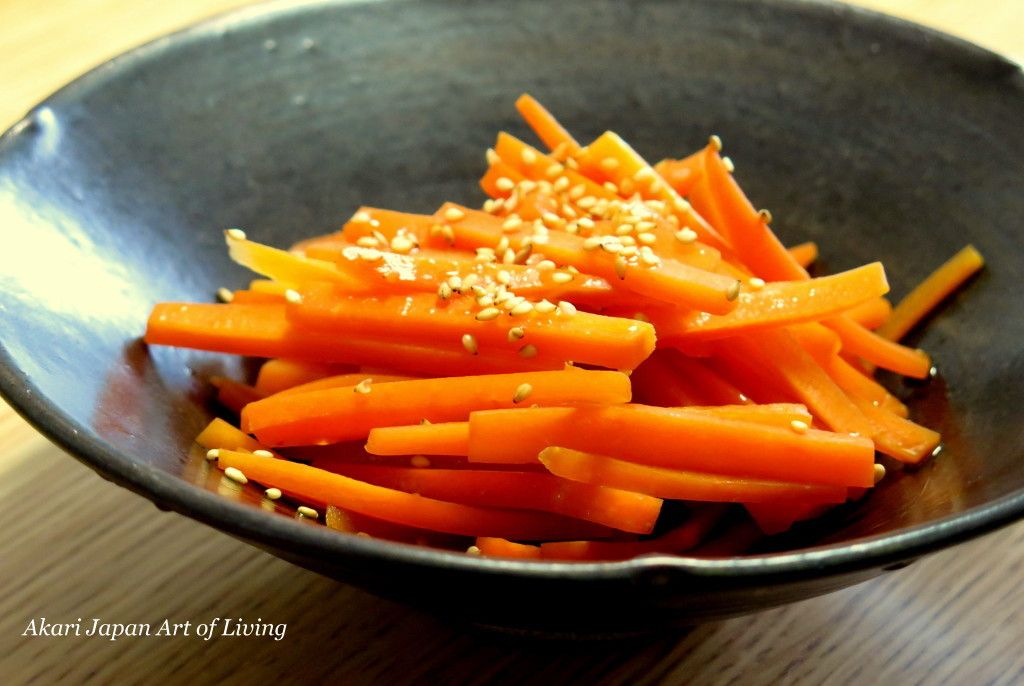
Amaranth Journal, one of the most beautiful art and food publications I know, has just published my essay entitled Cooking Carrots Like a Makanai. If you’ve watched the Netflix Series “The Makanai; Cooking for the Maiko House” directed by the famous Kore-eda, you might appreciate my piece. But even if you never cook, have no interest in Japan,and eschew Netflix, please enjoy!
Cutting Carrots like a Makanai
Perhaps all you need is a really sharp knife. And a grandmother back in Aomori. I like to think that if I possessed both those things, I could be a cook like Kiyo, the exuberant and competent young woman at the heart of Kore-eda’s beautiful Netflix series, The Makanai: Cooking for the Maiko House. As I watch the show’s intro, I’m filled with a sort of awe and jealousy. I wanna cut carrots like that! Tidy, perfect matchstick carrots, sliced with a gentle bend of the wrist.
Kiyo doesn’t set out to be a cook. She leaves her hometown at sixteen and comes down to Kyoto with her best friend, Sumire, in hopes of becoming an apprentice geisha. She flunks out as a maiko, but she blossoms as a makanai, or maiko house cook. Of course, thanks to her grandmother’s example, she knows how to cook before she leaves home.
I didn’t set out to be a cook either. Cooking is not my profession. It’s just something that I do everyday, at least once a day. No one ever taught me to cook. Certainly, neither of my grandmothers. I learned the little I know through trial and error and reading cookbooks. But even though I devoured Julia Child, and the Silver Palate duo, and the Barefoot Contessa, I never took any of those writers or food performers as role models. They were technical instructors. They gave me tips and recipes – sometimes, great recipe but they didn’t speak to me on a soul level. Now, thanks to The Makanai, I have Kiyo.
Kiyo’s character does for me what no Rachel Ray every can. She makes me want to pay attention…to everything. The shapes and sizes and colors of vegetables, the moods and needs and wants of my household, the texture of pudding, the magic of old frying pans.
Kiyo can arrange fruits and whipped cream on layered slices of bread and get away with calling it Christmas cake. She can serve a ho-hum daily soup and ordinary rice balls, but she makes everything beautiful, elegant and visually enticing. The bland surface of her white stew will be punctuated with two notes of the most verdant broccoli ever seen. The common omigiri will have nothing rough about it, it will have been caressed into a perfectly smooth shape, like a newborn baby’s tush.
As you watch Kiyo going about her prepping and cooking, you realize that there is something beatific about her. Whether she is talking to her drying plums or serving amazake to Sumire in the middle of the night, she radiates peace. Not sacrifice, not the drudgery of Christian sainthood, but some kind of inner equilibrium. Kore-eda gives us a personnage who is content with her lot, consistently cheerful, untarnished by jealousy, and blessed with an infectious smile. As the show unfolds, we learn that Kiyo is a born nurturer. She is constantly nourishing others. Her generosity seems to be part of a quiet spiritual eco system. In place of prayer, there’s pudding.
I wanna be a cook like that. Even just a little bit.
It’s not only Kiyo’s gentle attitude which attracts me. It’s also the humble quality of the Saku House kitchen. A kitchen I can relate to. Kiyo is no food diva. She’s not producing dinner in a state of the art arena, with an eight burner stove, copper pots, multiple ovens, and those trendy under the counter refrigerators. The Saku House fridge looks like mine, modest and probably cramped, although we never see the inside. On the outside, a few magnets here and there holding up odd scraps of paper, tickets, or postcards. On the other hand, Kiyo’s stove is way less fancy than my ceramic top. And her counter space is nil. Yet she patiently turns out meals for a small crowd using two gas rings and a rice cooker.
It’s not about equipment, it’s about attention.
So I should be able to do it too, right?
I’m a frequent traveler to Japan and an ardent Nipponphile. I’m a sucker for anything Made in Japan, from anime to lacquerware, from notebooks at the Muji store to old nineties era J-Pop. I keep learning the language, but I’ve never attempted the cuisine. Nor have I wanted to. I’d rather go to a great sushi bar than learn to cut sashimi on my own. But Kiyo’s pain quotidien is a different matter. I don’t want to master the art of Japanese cooking, I want to extract the essence of Kiyo’s kitchen and apply to my own Italo-French-California-Swiss-New England repertoire.
I want to worry less about outcome –will the family or guests like this?…and concentrate more on joy…..maybe, decorating the plainest soup with a little sprig of something whimsical or beautiful. When was the last time I even made time for parsley? (so much trouble to chop!) I want to stop thinking I should learn to produce Danish Æbleskiver or Middle Eastern shawarma or some other international dish for my sophisticated daughter- in-law, and just serve her an egg salad sandwich – a beautiful egg salad sandwich, cut with precision as if it were a diamond.
I want to think about others and food in a way that I rarely do. Most of the time I see my family as stomachs that need to be filled. The meat and potatoes cavity of my husband. The brownie pit of visiting children. And I resent so many of my friends’ food “requirements.” I secretly groan when I think of the guests who only drink decaf, the ones who need black tea, those who require Stevia, those who grimace when there is no honey.
Saku House is made up of a motley group of women from different social classes, different ages, and different tastes. But Kiyo doesn’t become a slave to the whims of others. She seems to have a sixth sense about people’s real appetites.In each episode, we see her serving foods that fill unspoken needs and that go beyond the physiological. Who needs something warm? Who needs comfort? Who could benefit from a bit of sweetness?
I haven’t heard her worrying about too much sodium in the dashi.
Intellectually, I know that food is a gift. It’s the most important of gifts, from its origins in the dark, wormy earth to its appearance on our dinner plates. But somewhere along the way, I’ve lost track of its gift-ness. It has become a commodity.
I marvel at the way the character of Kiyo holds onto the sacredness of everyday food. The most humble daikon deserves attention. The tempura merits praise. Tsukemo are small treasures.
I want to be part of that celebration too.
Sometimes, when I turn off the television after watching The Makanai, I vow to splurge on a really good knife. I have to start somewhere.
Gabriella Brand’s essays, poetry, and short stories have appeared in over fifty literary publications. She is a Pushcart Prize nominee and a town Poet Laureate. A world traveler, Gabriella frequently falls in love with new foods, new languages, and new vistas, but she makes her home near New Haven, USA. She teaches writing in the OLLI program at the University of Connecticut. Her website is: gabriellabrand.net.
http://amaranthjournal.com/wp-content/uploads/2023/05/Amaranth-Summer23-Vol-2_Issue-1.pdf




LET US KNOW WHAT YOU THINK